Modified from a LinkedIn article posted 6 April 2025. View the original post.
One of the biggest takeaways from my recent research and project visits to South Africa and Rwanda has been the importance of context—not just acknowledging it, but truly striving to understand it. In this reflection from our journey, I want to share some thoughts on why contextual relevance and justice matter in international research and collaboration.
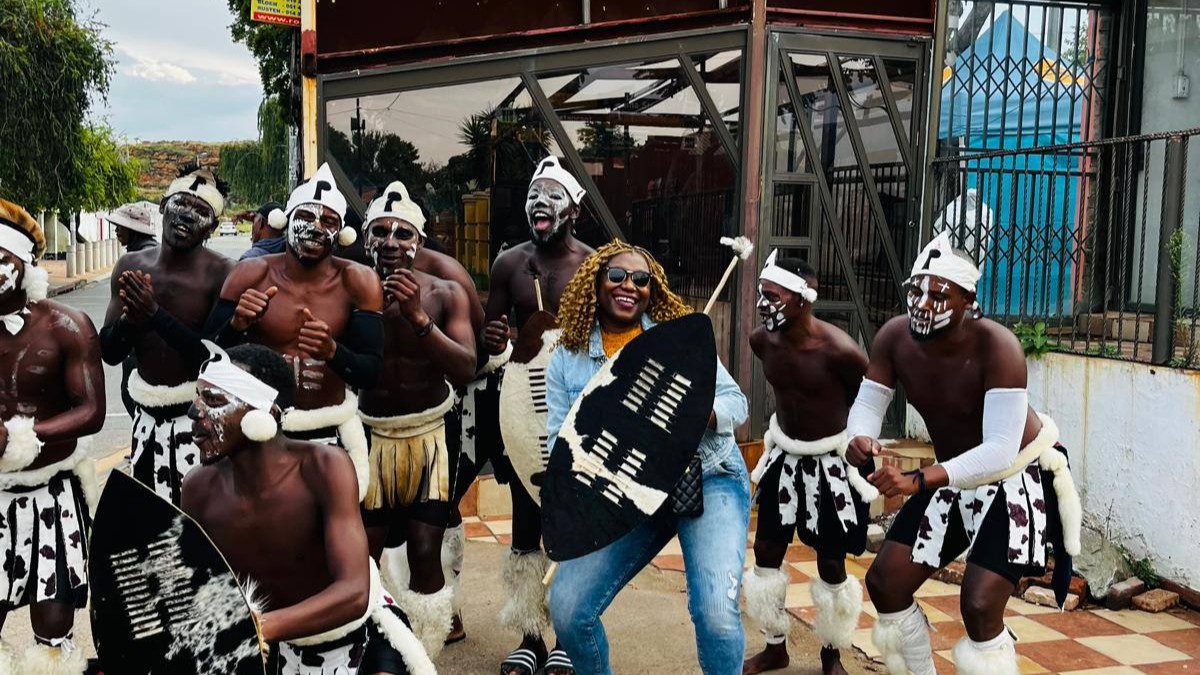
During the visits, local sites and community events stood out to me as powerful moments of learning about context. It wasn’t just the formal meetings and structured discussions that deepened our understanding. It was the informal conversations, the shared meals, the dance sessions with locals, moments that offered a glimpse into the everyday rhythms of life in those contexts. These experiences provided insights into the context behind the systems we’re studying, even though we know we’re still only scratching the surface.
Too often, due to time constraints, limited budgets, logistical challenges, or simply habit, our project and partner visits focus narrowly on institutions: we visit partners’ and participants’ offices, observe classrooms, and speak with project teams. These are, of course, essential pieces of the puzzle. They help us understand the phenomena under study, the work being done, and build relationships with those directly involved in our research and collaboration.
But if we stop there, we miss a lot.
What’s often missing is deeper engagement with the broader community; the people, the culture, the social fabric that shapes the systems we’re studying. Education doesn’t happen in a vacuum. It’s deeply embedded in society, history, and culture. To understand education or any phenomenon, we must understand the wider context in which it exists.
This isn’t a new idea. Over a century ago, Sir Michael Sadler warned against focusing only on the visible parts of education—buildings, teachers, textbooks—when studying other systems. He urged us to pay attention to the “intangible, impalpable, spiritual force” that upholds those systems, and noted that what happens outside the school often tells us more than what happens inside.
“A national system of education is a living thing, the outcome of forgotten struggles and battles long ago. It contains some of the secret workings of national life.” — Sir Michael Sadler (cited in Beech, 2006)
This quote has stayed with me throughout the visit. It’s highlights that if we want to understand our collaborators' contexts and conduct meaningful, contextually relevant research, we must go beyond the obvious. We need to make intentional efforts to engage with local histories, cultures, and everyday life and not just the formal structures and the people within them.
It also prompted reflection on what ethical collaboration looks like in international projects. Acknowledging the limits of our understanding of a partner's context is a necessity. Too often, research is conducted in an extractive manner—referred to as “helicopter research”—where external researchers collect data with minimal local involvement, often leaving little behind.
Real collaboration means more than relying on local gatekeepers. It means co-creating with local partners, ensuring access to data, providing opportunities to co-author publications (this helps greatly with contextual relevance), and ensuring a genuine say in the process. Transparency through open communication and negotiation, without assumptions, is key here.
As I think back on our visist, I’m reminded that understanding context isn’t just a research requirement. It’s a relational and ethical commitment. And it starts with listening, learning, and being present beyond the official sites.
Reference
Beech, J. (2006). The theme of educational transfer in comparative education: a view over time. Research in Comparative Education, 1(1), 2–13.